You don’t usually think about water until something feels off. Maybe your shower door looks cloudy no matter how often you wipe it down. Maybe your dishwasher leaves faint white spots on every glass. Or maybe your skin feels tight after a shower, like you didn’t quite rinse the soap away.
That’s when the question sneaks in: is this just normal… or is it my water?
The conversation around hard water vs soft water isn’t just technical jargon plumbers throw around. It’s a real, everyday distinction that quietly affects how your home functions, how your appliances age, and even how your laundry feels fresh out of the dryer.
Let’s break it down in a way that actually makes sense.
What Makes Water “Hard”?
Hard water simply means the water contains higher levels of dissolved minerals, primarily calcium and magnesium. These minerals aren’t harmful to drink in typical amounts. In fact, they occur naturally as groundwater flows through rock and soil. Related: Finding Better Drinking Water for Your Home in Dade City
The problem isn’t safety—it’s accumulation.
Over time, those dissolved minerals don’t just disappear. They leave behind residue. On faucets. Inside pipes. Around heating elements. It starts small. A faint chalky ring around the sink drain. A stubborn film on the showerhead.
Eventually, it turns into visible mineral buildup that becomes harder to ignore.
How Soft Water Is Different
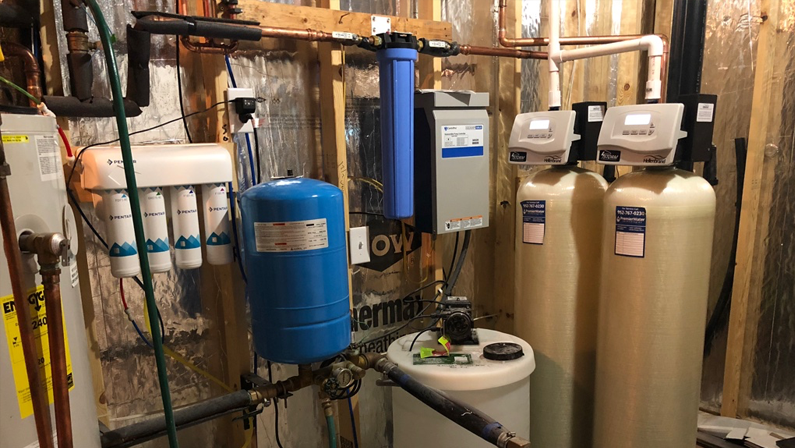
Soft water has had those hardness minerals reduced or removed. Typically, this is done through a water softening system that uses ion exchange to swap calcium and magnesium for sodium or potassium.
The result feels noticeably different.
Soap lathers more easily. Shampoo rinses cleaner. Towels feel fluffier. You might even notice your skin doesn’t feel as dry after a shower.
The difference isn’t dramatic at first. It’s subtle. But once you get used to soft water, going back to hard water feels… off.
The Hidden Impact on Appliances
Here’s where the issue goes beyond cosmetic concerns.
Hard water doesn’t just leave spots. It settles inside your plumbing system and appliances. Every time water is heated—inside a water heater, dishwasher, or washing machine—those minerals crystallize and cling to surfaces. Related: Making Better Water Easier: A Practical Guide to Whole-Home Water Treatment
Over months and years, that accumulation can cause real appliance strain. Heating elements have to work harder. Pipes narrow slightly as scale forms along the interior. Energy efficiency drops incrementally.
You don’t wake up one morning with a broken appliance. It’s more gradual than that. Higher energy bills. Slightly longer heating times. A dishwasher that seems less effective than it used to be.
Scale buildup is like cholesterol for your plumbing. You don’t see it happening, but it’s there.
Laundry, Dishes, and Daily Frustrations
Hard water interferes with soap’s ability to dissolve properly. Instead of fully rinsing away, soap binds to minerals and forms residue—what we commonly call soap scum.
That’s why clothes washed in hard water can feel stiff. Why glasses come out of the dishwasher with cloudy streaks. Why bathroom cleaning sometimes feels like an endless battle.
Soft water, on the other hand, allows soap to do what it’s meant to do. It dissolves and rinses cleanly. You often use less detergent, too, because you don’t need to compensate for mineral interference.
It’s a small efficiency boost that adds up.
Is Hard Water Dangerous?
Not usually.
Hard water is more of a maintenance issue than a health risk in most cases. Many municipalities provide water that’s technically safe but classified as moderately or highly hard. Related: Why Professional Water Treatment Installation Makes a Real Difference
That said, extremely hard water can exacerbate plumbing issues and reduce appliance lifespan significantly.
The key isn’t panic—it’s awareness.
When Should You Consider a Softener?
If you’re dealing with persistent scale on fixtures, reduced water pressure from clogged showerheads, or appliances aging faster than expected, it may be worth testing your water hardness.
Water softeners don’t filter water in the traditional sense. They transform it by removing the minerals responsible for hardness.
For homes in high-hardness regions, that transformation can feel like a practical upgrade rather than a luxury.
Cost vs Long-Term Savings
Some homeowners hesitate because installing a water softener requires an upfront investment. That’s fair.
But consider the long-term picture. Reduced detergent use. Fewer appliance repairs. Lower energy consumption. Less time spent scrubbing scale off bathroom surfaces. Related: How Whole-House Water Filtration Can Transform the Quality of Your Home’s Water
Over time, those benefits often balance out the initial cost.
And there’s something to be said for convenience—showers that feel better, dishes that rinse clean the first time, appliances that hum along without strain.
A Balanced Perspective
Not every home needs a water softener. If your water hardness levels are low to moderate and you’re not experiencing noticeable issues, it might not be necessary.
But in areas with significant hardness, the difference between hard and soft water becomes more than academic. It becomes practical.
You see it in your monthly energy bill. You feel it in your laundry. You notice it in how often you replace appliances.
Final Thoughts
Water is one of those background utilities we rarely think about—until it starts affecting daily life in subtle, frustrating ways.
Understanding the difference between hard and soft water isn’t about technical trivia. It’s about recognizing what’s happening behind the scenes in your home. Mineral content shapes everything from soap performance to appliance longevity. Related: Why Better Water at Home Feels Like a Bigger Change Than You…
When you pay attention to the signs—scale, cloudy glassware, reduced efficiency—you start to see water quality not as an abstract concept, but as something deeply practical.
And once you’ve experienced the ease of soft water, it’s hard to ignore how much smoother everyday life can feel.